Hide Status Message

Pages

Showing posts with label Human Rights Watch - Defending Human Rights Worldwide. Show all posts

Thursday, March 26, 2020

France: Children Left in Limbo despite COVID-19

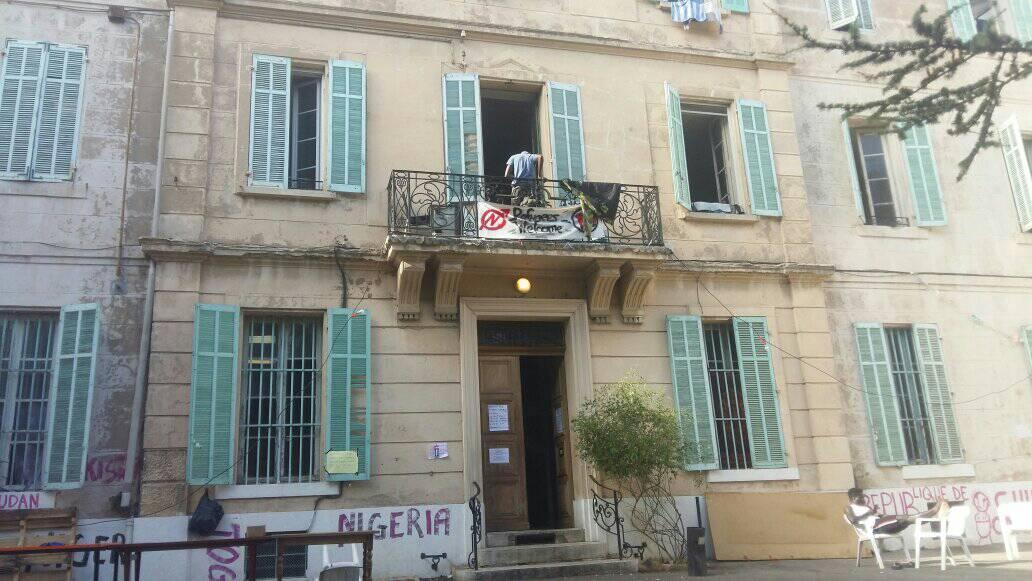
Building owned by the Marseille Church, now called Saint-Just squat, where as of March 2020 about 200 migrants lived, including families and about 100 unaccompanied migrant children, Marseille, France, October 2019. 

© 2019 Collectif 59 Saint-Just
(Paris) – Migrant children are being left at risk to the coronavirus because of failures by child protection authorities in Marseille and Gap, France, Human Rights Watch said today. Unaccompanied migrant children are not being given shelter and other essential services by the Bouches-du-Rhône and Hautes-Alpes departments, which are responsible for their care, putting them at risk and weakening the authorities’ response to the pandemic.

Despite lockdown and prevention measures decided by the French government, unaccompanied migrant children in Marseille and Gap continue to live in precarious and overcrowded conditions, without the child protection services they need and should receive.

“The treatment of these children by the authorities was already unacceptable before the epidemic, and today it is not only intolerable but also dangerous,” said Bénédicte Jeannerod, France director at Human Rights Watch. “The authorities should urgently address this and provide these children with shelter and access to essential services to stop the spread of coronavirus in this already vulnerable group.”

In a tweet on March 22, Adrien Taquet, Secretary of State for Child Protection, said “[...] Whether deemed a minor or an adult, every youth who requests it will be provided with shelter. State and departmental services are mobilized to ensure this.”

Despite this important and welcome announcement, around 100 unaccompanied migrant children in Marseille must stay in a dangerously overcrowded squat while an unknown number of others fend for themselves on the streets because authorities have not provided the children protection services they are entitled to by law. In Gap, the capital of the Hautes-Alpes department, where Human Rights Watch recently investigated the poor treatment of unaccompanied migrant children by the departmental authorities, 23 unaccompanied children who are appealing adverse age assessments live in precarious conditions in an occupied building in the city center.

COVID-19 containment measures currently underway in France mean that ADDAP 13, the agency carrying out age assessments of youths in Marseille to determine if they are children or adults, has halted its work, several sources told Human Rights Watch. If nothing is done, migrant children will have to wait for weeks or even months without accommodation or access to basic services while they wait for their age assessment.

While they are waiting, or after they are determined to be “adults” for often arbitrary reasons, children live on the streets, at the railway station, or find shelter in the Collectif 59 Saint-Just squat, an overcrowded building owned by the Catholic Church, which has threatened the occupants with eviction. Médecins Sans Frontières opened three emergency accommodation centers at the beginning of January 2020 to prevent children from ending up on the streets.

Volunteers from Collectif 59 Saint-Just told Human Rights Watch that without the squat, unaccompanied migrant children, as well as other migrants, would be living on the streets but that they were at capacity and could not accept new people.

These precarious living conditions do not allow migrant children to follow the prevention and containment measures imposed by the government in response to coronavirus. People living in the squat are sharing rooms with many other people, making it impossible to practice social distancing or self-isolation.

Unaccompanied migrant children in this situation include children waiting to have their age assessed. For some, a juvenile judge has issued decisions ordering the departmental authorities to provide them with housing while waiting to go through the age assessment process. Lawyers representing unaccompanied migrant children and members of the Unaccompanied Children Commission of the Marseille Bar have called on the department to provide accommodation for all unaccompanied migrant children regardless of their status. The department often does not comply with the judge’s order, saying it does not have enough places.

Saint-Just squat volunteers have managed to get many children enrolled in schools, but it is impossible for them to take part in distance learning because the squat has no internet connection.

Hearings to challenge negative age assessments are also indefinitely postponed. In the meantime, the department should ensure that all those who say they are unaccompanied children are provided with adequate, safe housing regardless of where they are in the process.

“Local and national authorities must put the protection of those most excluded and at risk of contracting the disease at the heart of their response to Covid-19. Unaccompanied migrant children in very precarious situations in Marseille and elsewhere in France are clearly among them,” Jeannerod said.

For additional details about the situation, please see below.

Human Rights Watch interviewed 16 unaccompanied migrant children in Marseille in March 2020, along with volunteers from several groups that help migrant children and three lawyers who represent unaccompanied migrant children. After the French government announced travel restrictions and other containment measures to address the COVID-19 epidemic, Human Rights Watch undertook additional interviews with volunteers, aid workers, and lawyers by telephone.

Abandoned by Authorities

When youths who say they are children arrive in Marseille, they must register with ADDAP 13, a nonprofit agency mandated by the Bouches-du-Rhône department to assess their age. When children register, ADDAP 13 tells them they will be told when there is a place to stay to carry out their age assessment. The agency only carries out the age assessment after it finds available accommodation, a process that can take four to five months.

While they wait, children are on their own, without the emergency shelter and access to child protection services to which they are entitled by law. To keep them from sleeping on the street, since December 2018 the Collectif 59 Saint Just has occupied a building owned by the Catholic Church, where about 200 migrants, mainly unaccompanied children and families, stay.

Nearly 500 unaccompanied children have passed through the squat since it opened. “Before Saint-Just, the youths slept at the train station … The squat is a remedy for the dysfunction of the authorities,” a volunteer told Human Rights Watch during a visit on March 2. In January 2020, because the squat was full, Médecins Sans Frontières (MSF) decided to open three emergency shelters for what was intended to be a limited period of 3 months, which was then renewed for an additional 2 months, until the end of May. The MSF shelters now house 60 unaccompanied children.

“Today, 200 people [women with children, a few couples, and about a hundred children] live in overcrowded conditions that do not allow for the necessary distancing. Neither the solidarity workers nor the residents have protective masks and hydro-alcoholic gel. There are not enough water points and do not allow people to wash their hands often,” a volunteer from Collectif 59 Saint Just in Marseille told Human Rights Watch.

Unaccompanied migrant children awaiting age assessment or appeal before the juvenile judge are forced to live in extremely precarious and overcrowded conditions that do not let them follow prevention and containment measures imposed by the government in response to coronavirus.

Bouches-du-Rhône Authorities Defy Court Directives

Juvenile judges have issued some temporary placement orders directing local authorities to take unaccompanied migrant children into care pending age assessments. Local authorities usually do not comply with these orders, Human Rights Watch found.

Faced with local authorities’ refusal to comply with judicial orders, lawyers regularly file urgent proceedings before the Marseille Administrative Court, which has repeatedly ordered the Departmental Council to provide accommodation and care for migrant children, with a fine in the event of delay.

One lawyer filed a new urgent proceeding on March 18, two days after the French government announced containment measures to deal with COVID-19. In a court filing seen by Human Rights Watch, the Bouches-du-Rhône department asked the court to reject the request, arguing it does not have sufficient accommodation: “In the context of the current pandemic, some hotels that were housing children have decided to close, forcing the department to urgently seek new places and thus considerably increasing the difficulties.” The department also called on the state “to intervene to help the Department deal with this situation and thus enable it to fulfil its legal obligations” and “requests that it participate in the accommodation and care of the youth.” The Administrative Court once again ordered the department to take the youth into care, but with no penalty for noncompliance.

On March 16, the lawyers of the Unaccompanied Minors Commission of the Marseille Bar wrote to the department’s Deputy Directorate General of Solidarity (DGAS) to request that all unaccompanied migrant children with unfulfilled temporary placement orders or awaiting assessment be provided with emergency housing without delay, noting that in the meantime, these children are “forced to live in conditions that expose them heavily to the epidemic.” The department had not responded to this request at time of writing.

Inadequate Protection in the Hautes-Alpes

Human Rights Watch also spoke by telephone with volunteers from Réseau Hospitalité and a member of the Médecins du Monde team working in Gap. They all reported an alarming situation for 23 unaccompanied migrant children living at the Césaï squat in downtown Gap, while awaiting an appeal before the juvenile judge. The Césaï squat hosts 70 residents in total.

“The migrant children are living there because of the authorities’ failure to provide them with accommodation. They are mostly living in unventilated spaces, infested with bedbugs, all over each other and the building only has one water point. In the current epidemic situation, the situation is explosive,” Françoise Martin-Cola, a volunteer doctor from Réseau Hospitalité, told Human Rights Watch in a telephone interview on 24 March.

“The overcrowded conditions in which these children live exposes them and jeopardizes the preventive actions put in place. It is imperative that they are urgently provided with accommodation in conditions that meet the measures required to deal with the Covid-19 epidemic,” Carla Melki, a representative from Médecins du Monde said.

The Regional Health Agency (ARS) and Médecins du Monde have set up mobile medical teams that are going to the Césaï squat among other places.

Local aid groups called the Hautes-Alpes authorities to provide these children with emergency housing and care. In a letter that Human Rights Watch was able to view, the Prefect informed the groups that those children awaiting appeal will not be given shelter and care: “As for the other youths whose names you have sent me, some were not recognized as children after assessment by the departmental council, while others are not known by these services or mine and cannot therefore be taken into care.”

Meeting Obligations

Each department in France is responsible for ensuring that unaccompanied migrant children are provided with emergency shelter and care.

On March 21, 2020, Adrien Taquet, Secretary of State for Child Protection, sent a letter to the Presidents of the Departmental Councils, in which he said: “Priority must be given to [the] accommodation [of unaccompanied children] even if the conditions for assessing the minority are disrupted.”

“The protection of minors, particularly those presenting themselves as unaccompanied minors, must be guaranteed through systematic accommodation,” the letter said.

This recommendation was reiterated in a tweet on March 22: “[...] Whether he is deemed a minor or an adult, every youth who requests it will be provided with shelter. State and departmental services are mobilized to ensure this.”

It is understandable that the age assessment interviews are suspended due to the current health situation, but the Bouches-du-Rhône department should place children awaiting assessment in adequate emergency accommodation where they can be protected, have access to basic hygiene, and have an Internet connection that allows them to continue their education online as offered by the Ministry of Education to all pupils in France, Human Rights Watch said.

For children in Marseille and Gap waiting for a hearing to appeal the rejection of their juvenile status, and deprived of accommodation, the wait will be even longer, as judges are no longer hearing appeals. These children should also be given accommodation to protect them from the coronavirus.

Departmental councils elsewhere in France should also ensure unaccompanied children’s right to adequate housing and provide them with the care and protection they need, including during any period of age assessment or judicial review of adverse age assessments.


from Human Rights Watch - Defending Human Rights Worldwide https://ift.tt/2vUt5XM
via IFTTT

Friday, January 24, 2020

World Court Rules Against Myanmar on Rohingya

Rohingya refugees walk through rice fields after crossing the border from Myanmar into Palang Khali, Bangladesh, October 19, 2017.

© 2017 Jorge Silva/Reuters
(Brussels) – The International Court of Justice (ICJ) order on January 23, 2020, directing Myanmar to prevent all genocidal acts against Rohingya Muslims is crucial for protecting the remaining Rohingya in Rakhine State, Human Rights Watch said today. The court unanimously adopted “provisional measures” that require Myanmar to prevent genocide and take steps to preserve evidence.

Myanmar’s military committed extensive atrocities against the Rohingya, including murder, rape, and arson, that peaked during its late 2017 campaign of ethnic cleansing, forcing more than 740,000 Rohingya to flee to Bangladesh. In September 2019, the United Nations-backed International Independent Fact-Finding Mission on Myanmar found that the 600,000 Rohingya remaining in Myanmar “may face a greater threat of genocide than ever.” 

“The ICJ order to Myanmar to take concrete steps to prevent the genocide of the Rohingya is a landmark step to stop further atrocities against one of the world’s most persecuted people,” said Param-Preet Singh, associate international justice director at Human Rights Watch. “Concerned governments and UN bodies should now weigh in to ensure that the order is enforced as the genocide case moves forward.”

The order follows Gambia’s November 11, 2019 application to the court alleging that abuses by Myanmar’s military in Rakhine State against the Rohingya violate the Convention on the Prevention and Punishment of the Crime of Genocide and urgently seeking provisional measures. The ICJ held hearings on Gambia’s provisional measures request in December.

The ICJ provisional measures order is legally binding on the parties. In November, Myanmar explicitly recognized the ICJ’s authority and in December, Aung San Suu Kyi, representing Myanmar before the ICJ in her capacity as foreign minister, acknowledged the court’s role as a “vital refuge of international justice.”

The court unanimously ordered Myanmar to prevent all acts under article 2 of the Genocide Convention, ensure that its military does not commit genocide, and take effective measures to preserve evidence related to the underlying genocide case. The court has also ordered Myanmar to report on its implementation of the order in four months, and then every six months afterwards.

The order does not prejudge the question of the court’s jurisdiction to deal with the merits of the case, the case’s admissibility before the court, or the merits of Gambia’s allegation that Myanmar has violated provisions of the Genocide Convention. A case before the ICJ can take years to reach a resolution. 

Under article 41(2) of the ICJ Statute, the court’s provisional measures orders are automatically sent to the UN Security Council. Such an order will increase pressure on the council to take concrete action in Myanmar, including through a binding resolution to address some of the indicators of genocidal intent outlined in the comprehensive 2018 report of the international fact-finding mission.

For example, the Security Council could pass a resolution directing Myanmar to lift restrictions on Rohingya’s freedom of movement, eliminate unnecessary restrictions on humanitarian access to Rakhine State, repeal discriminatory laws, and ban practices that limit Rohingya access to education, health care, and livelihoods. Thus far, the Security Council has not taken significant action on Myanmar, in part because of Russia and China’s apparent willingness to use their vetoes to shield Myanmar’s government and military.

“The ICJ order brings increased scrutiny of Myanmar’s horrific brutality against the Rohingya and raises the political cost of the UN Security Council’s weak response to the crisis so far,” Singh said. “China and Russia should stop blocking the Security Council from taking action to protect the Rohingya.”

Even with a deadlocked Security Council, UN Secretary-General Antonio Guterres could bring the matter of Myanmar before the council under article 99 of the UN Charter. On September 2, 2017, Guterres wrote a letter to the Security Council president urging the council to “press for restraint and calm to avoid a humanitarian catastrophe,’’ and for “full respect for human rights and international humanitarian law, and the continued presence and safety of the United Nations partners to provide humanitarian assistance to those in need without disruption.”

Other UN bodies should take steps to reinforce the order, Human Rights Watch said. The UN Human Rights Council and the UN General Assembly could pass resolutions calling on Myanmar to comply with its terms. This could spur other countries to take concrete action in their bilateral relations with Myanmar.

In filing the genocide case, Gambia has the backing of the 57 members of the Organisation of Islamic Cooperation. On December 9, 2019, the governments of Canada and the Netherlands, both parties to the Genocide Convention, announced that they considered it “their obligation to support the Gambia before the ICJ, as it should concern all of humanity.” On January 9, 2020, the British government welcomed Gambia’s case against Myanmar. Other parties to the convention should press Myanmar to comply with the court’s order, Human Rights Watch said. If Myanmar fails to act, Gambia could raise Myanmar’s non-compliance with the Security Council under article 94 of the UN charter.

“The growing global support for Gambia’s case raises the stakes for Myanmar to engage in the ICJ process in a meaningful way and change its approach to the Rohingya,” Singh said. “The Myanmar government cannot hide behind its powerful friends or the banner of sovereignty to escape its responsibilities under the Genocide Convention.”


from Human Rights Watch - Defending Human Rights Worldwide https://ift.tt/38usb1N
via IFTTT

Monday, December 16, 2019

Development Banks to Address Palm Oil Abuses in DR Congo

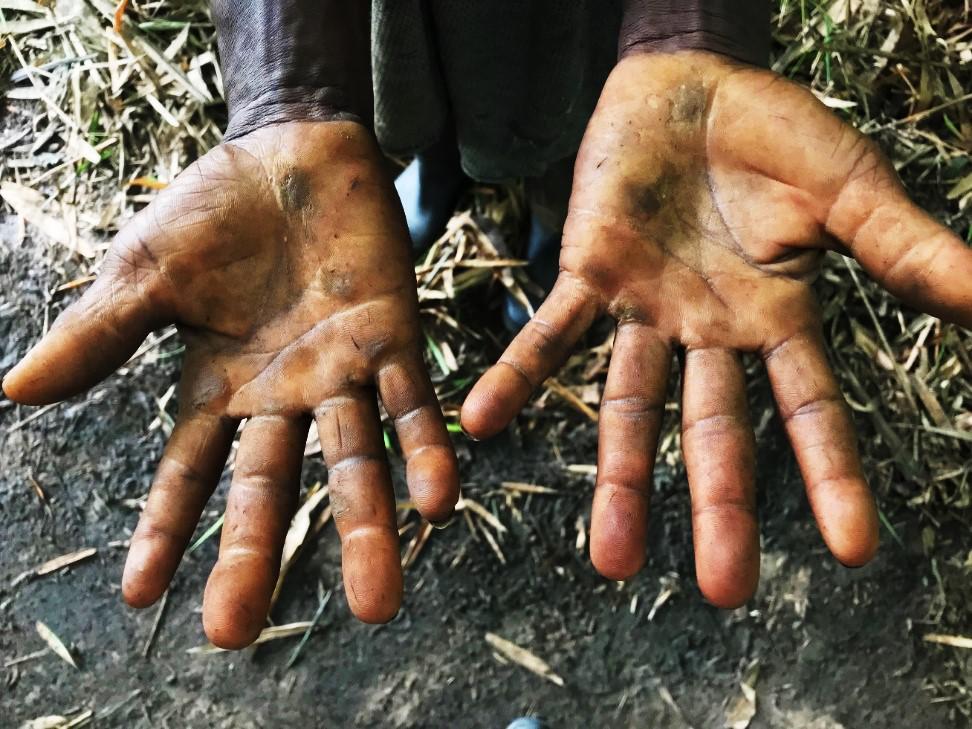
“I don’t have gloves; when we pick up the fruit bunches it hurts us,” said a palm fruit harvester that has worked for the company for over a decade. “Sometimes the fruit bunches fall on people or animals’ excrement.” Boteka, November 17, 2018.

© 2018 Luciana Téllez/Human Rights Watch.
Four European development banks have announced they will require a major palm oil company in the Democratic Republic of Congo to take steps to redress human rights abuses recently reported by Human Rights Watch.

The 95-page report, A Dirty Investment, concluded that Feronia, which is financed by the four banks, was responsible for health and labor rights abuses, and environmental harm.

The banks responded on the same day as the report launch, saying they would require the company to take a series of measures to deal with the violations. Feronia employs more than 10,000 workers through its subsidiary in Congo, and its plantations are home to more than 100,000 people.

Human Rights Watch found that the company exposes workers to toxic pesticides and engages in abusive employment practices that result in extreme poverty wages. The company’s factories also dump untreated industrial waste that may have contaminated the only source of drinking water for several hundred villagers. It was the development banks’ obligation to prevent and redress abuses, but their monitoring and accountability mechanisms failed to do so.

The government-owned banks – Belgian BIO, British CDC Group, German DEG, and Dutch FMO – have invested US$100 million in the company since 2013. CDC Group also owns 38 percent of Feronia.

Human Rights Watch conducted more than 200 interviews for the report and traveled 1,200 kilometers on the Congo River to reach people in the remote plantations.

The measures the banks announced include addressing labor rights violations that result in extremely low wages, ensuring wage parity between men and women, addressing villagers’ concerns around water contamination, and taking steps to protect the health of laborers who spray pesticides.

Human Rights Watch will continue to engage the banks over the implementation of these measures. What is still lacking, however, is a commitment to address the monitoring and accountability failures that allowed for these abuses to happen under their watch. The banks should carry out structural reforms, including strengthening monitoring and accountability mechanisms, that would not only protect thousands of workers in Congo, but also protect the rights of people affected by the more than 2,000 projects the banks are involved in across the developing world, where they control billions of dollars in investments.


from Human Rights Watch - Defending Human Rights Worldwide https://ift.tt/2PpjkI0
via IFTTT

Friday, December 6, 2019

Questions and Answers on Gambia’s Genocide Case Against Myanmar before the ICJ

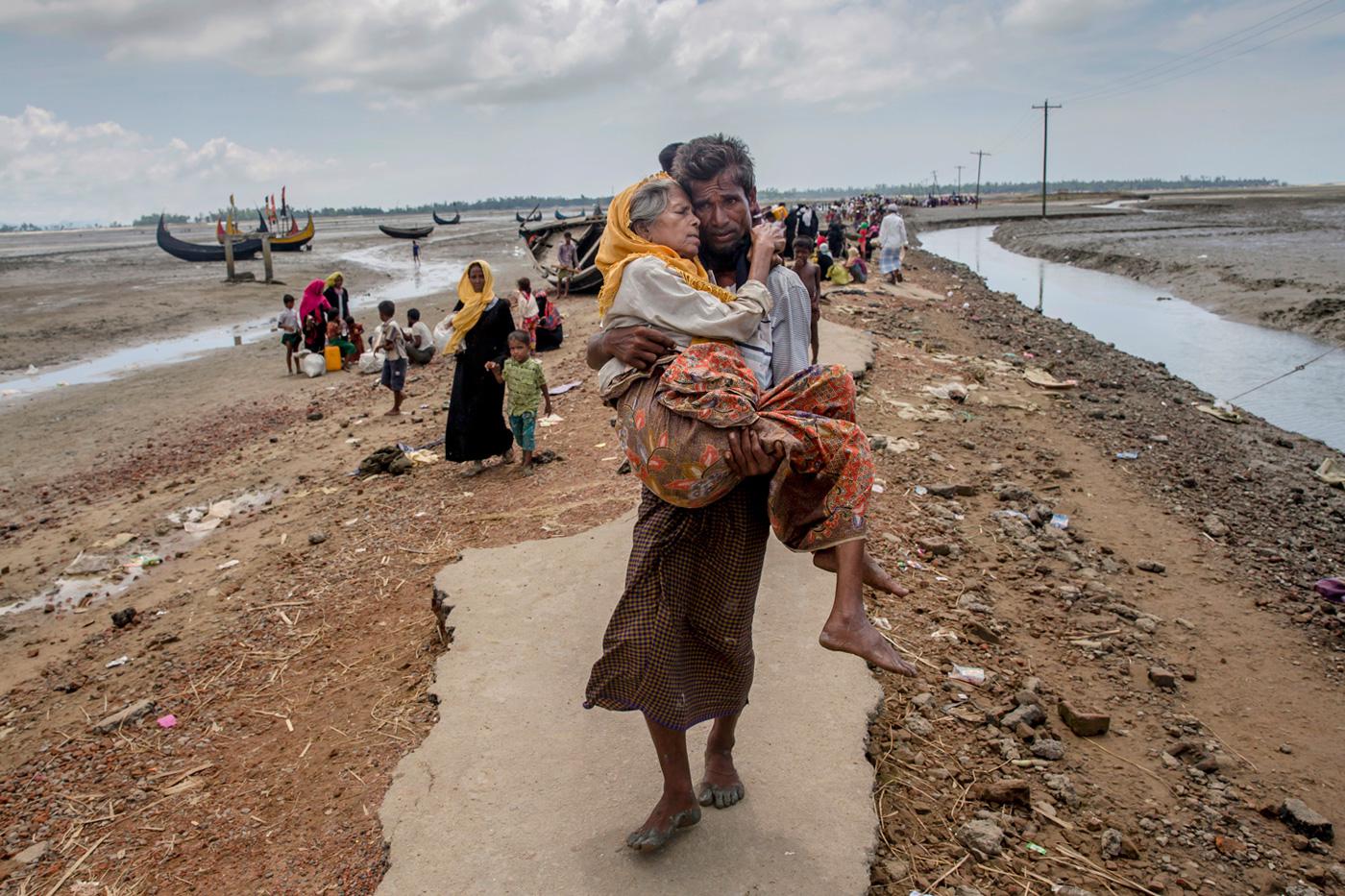
Abdul Kareem, a Rohingya Muslim, carries his mother, Alima Khatoon, to a refugee camp after crossing from Burma into Bangladesh on Sept. 16, 2017.

© 2017 Dar Yasin/AP

Why has Gambia filed a case against Myanmar before the International Court of Justice?

Why is this case important?

Will Myanmar respond to Gambia’s ICJ case?

How could the ICJ enforce a provisional measures order?

What has Gambia alleged in its complaint against Myanmar?

What relief can the ICJ provide to victims if it rules in favor of Gambia?

Who are the ICJ’s judges?

Has the ICJ ruled on other genocide cases?

Are there efforts to bring individual perpetrators in Myanmar to justice?

What are the prospects for justice in Myanmar?

1.Why has Gambia filed a case against Myanmar before the International Court of Justice?

Myanmar’s military, known as the Tatmadaw, has committed extensive atrocities against ethnic Rohingya Muslims, including murder, rape, and arson. These abuses reached their peak during the Tatmadaw’s brutal ethnic cleansing campaign, beginning in August 2017, that forced more than 740,000 Rohingya to flee to Bangladesh. These crimes have been thoroughly documented by the United Nations, the media, and human rights groups, including Human Rights Watch.

Gambia – with the backing of the 57 members of the Organisation of Islamic Cooperation – has filed a case before the International Court of Justice (ICJ) alleging that Myanmar’s atrocities against the Rohingya in Rakhine State violate various provisions of the Convention on the Prevention and Punishment of the Crime of Genocide (“the Genocide Convention”). Gambia, which ratified the convention in 1978, brought the case under article 9 of the convention, which allows for disputes between parties “relating to the responsibility of a State for genocide” and related acts to be submitted to the ICJ by any party. The ICJ previously confirmed that all member states of the convention have a duty to prevent and to punish genocide. Myanmar has been a party to the Genocide Convention since 1956.

The case before the ICJ is not a criminal case against individual alleged perpetrators and it does not involve the International Criminal Court (ICC), a separate body (see below). Rather, the case is “state-to-state” litigation between UN member states governed by legal provisions in the UN Charter, the ICJ Statute, and the Genocide Convention.

Gambia’s filing marks the first time that a country without any direct connection to the alleged crimes has used its membership in the Genocide Convention to bring a case before the ICJ. Gambia has only recently emerged from the repressive 22-year rule of Yahyah Jammeh and its own difficult history of human rights violations. After filing the case, Gambian Justice Minister Abubacarr Tambadou said that “the aim is to get Myanmar to account for its action against its own people: the Rohingya.”

2.Why is this case important?

The Tatmadaw’s well-documented crimes against the Rohingya and other ethnic minority groups in Myanmar span decades, but until Gambia brought a case before the ICJ, the government’s atrocities had largely been beyond the reach of justice.

While the case may take many years to reach a final ruling, Gambia has asked the court for an order for provisional measures “to protect the rights of the Rohingya group and those of The Gambia under the Genocide Convention, and to prevent the aggravation or extension of the dispute pending the final judgment of the Court.” The hearing on provisional measures will take place on December 10-12, 2019 in The Hague, Netherlands.

Among the provisional measures that Gambia has requested the court to order “as a matter of extreme urgency” are that Myanmar should immediately take all measures to prevent all genocidal acts; Myanmar should ensure that the military does not commit any genocidal acts; and Myanmar should not destroy or render inaccessible any events related to the underlying application.

The timeline for a decision on the provisional measures can be relatively quick. Bosnia and Herzegovina asked for provisional measures when filing its Genocide Convention case against the Federal Republic of Yugoslavia on March 20, 1993. In that case the ICJ issued an order several weeks later, on April 8, 1993.

3.Will Myanmar respond to Gambia’s ICJ case?

Myanmar announced that State Counsellor Aung San Suu Kyi, in her capacity as foreign affairs minister, will lead its delegation to the ICJ to “defend the national interests of Myanmar.” In doing so, she reportedly enjoys the support of her political party, the National League for Democracy, and the Myanmar parliament. The military has said it “will fully cooperate with the government” and follow its instructions. The government explicitly noted that all members of the UN, including Myanmar, are bound by the ICJ Statute.

While public support in Myanmar for Aung San Suu Kyi’s decision to represent the country before the ICJ is reportedly high, those who might want to criticize her or the government would do so at considerable risk. Myanmar authorities have frequently arrested and prosecuted people speaking or writing critically of the government, military, and officials.

Still, some representatives of ethnic groups both inside and outside the country have issued statements backing the ICJ proceedings, noting similarities in the Tatmadaw’s brutal tactics against the Rohingya and other minority communities.

4.How could the ICJ enforce a provisional measures order?

The ICJ’s provisional measures orders are legally binding on the parties. Myanmar’s explicit recognition of the ICJ’s authority should dispense with any legal question as to whether the government needs to comply with the court’s orders and decisions. Gambia has also asked the court to require Myanmar and Gambia to provide the court with a report on steps taken to implement a provisional measures order “no later than four months from its issuance.”

Other UN bodies could take steps to increase the power of the ICJ’s order and, by extension, increase the political cost should Myanmar fail to comply.

Under article 41(2) of the ICJ Statute, the court’s provisional measures orders are automatically sent to the UN Security Council. Such an order would increase pressure on the council to take concrete action in Myanmar, including through a binding resolution to address some of the indicators of genocidal intent outlined in the comprehensive 2018 report of the UN Independent International Fact-Finding Mission on Myanmar (“Fact Finding Mission”).

For example, the Security Council could pass a resolution directing Myanmar to lift restrictions on Rohingya’s freedom of movement, eliminate unnecessary restrictions on humanitarian access to Rakhine State, repeal discriminatory laws, and ban practices that limit Rohingya access to education, health care, and livelihoods. Thus far, the Security Council has been deadlocked on Myanmar, in part because of China’s support for Myanmar’s leadership and its veto power.

The UN General Assembly can also reinforce the weight of an ICJ order on Myanmar by passing a resolution urging the government to comply with its terms.

5.What has Gambia alleged in its complaint against Myanmar?

Establishing that genocide has taken place under the Genocide Convention requires demonstrating genocidal intent and genocidal acts, meaning the state had the intent to destroy a national, ethnic, racial, or religious group in whole or in part.

In 2018, the Fact-Finding Mission presented a comprehensive analysis of the Rohingya’s status as a protected group, genocidal acts, and indicators of genocidal intent and concluded that “the actions of those who orchestrated the attacks on the Rohingya read as a veritable check-list” on how to destroy the target group in whole or in part. The Fact-Finding Mission further concluded in 2019 that “the State of Myanmar breached its obligation not to commit genocide under the Genocide Convention.”

Gambia’s application identifies two elements of Myanmar’s persecution of the Rohingya as “particularly indicative of genocidal intent”: its systematic denial of legal rights to Rohingya, notably restrictions on their ability to marry and bear children and severe restrictions on freedom of movement, including detention camps, and its support for, and participation in, pervasive hate campaigns aimed at demonizing and dehumanizing the group.

As for the genocidal acts, the application points to incidents from the October 2016 and August 2017 “clearance operations” including mass executions of Rohingya men, women, and children; the systematic burning of Rohingya villages “with the intent to destroy the group in whole or in part”; the targeting of children; and the commission of rape and sexual violence on a massive scale.

As for ongoing acts of genocide, the application highlights continuing attacks on the Rohingya, notably the destruction of more than 30 villages between November 2018 and May 2019 and the denial to Rohingya of access to food. It also notes the Fact-Finding Mission’s recent warning that the 600,000 Rohingya still in Myanmar live under the threat of further genocidal acts by Myanmar.

6.What relief can the ICJ provide to victims if it rules in favor of Gambia?

Gambia has asked the court to declare that Myanmar has and continues to breach its obligations under the Genocide Convention; must cease ongoing genocidal acts and fully respect its obligations moving forward; must ensure that perpetrators of genocide are held to account before a competent tribunal; and must provide reparations to Rohingya victims of genocidal acts, including “allowing the safe and dignified return” of those who have been forcibly displaced and “respect for their full citizenship and human rights and protection against discrimination, persecution and other related acts.” Gambia has also asked that Myanmar offer assurances and guarantees of non-repetition of violations of the Genocide Convention.

Under article 94 of the UN Charter, all member countries must abide by ICJ decisions in cases to which they are a party, and in the event of non-compliance, the UN Security Council may “decide upon measures to be taken to give effect to the judgment.”

7.Who are the ICJ’s judges?

The ICJ’s 15-member bench is composed of judges from different countries representing the world’s main legal systems. ICJ judges work independently of any government and before taking up their duties, must solemnly declare in open court that they will “exercise their powers impartially and conscientiously.” Each judge is elected to serve a nine-year term.

Under article 31 of the ICJ Statute, a party to a case before the ICJ can appoint an ad hoc judge to act in the case if it does not already have a judge of its nationality on the bench.

Gambia has asked the court to appoint South African jurist Dr. Navanethem (Navi) Pillay as its ad hoc judge. Pillay served as a judge on the International Criminal Tribunal for Rwanda and the International Criminal Court before becoming the UN High Commissioner for Human Rights from 2008 to 2014.

Myanmar has asked the court to appoint German academic Professor Claus Kress as its ad hoc judge. Kress is the director of the Institute of International Peace and Security Law at the University of Cologne, Germany.

8.Has the ICJ ruled on other genocide cases?

In 2007, the ICJ ruled that there was a genocide in the Srebrenica enclave in Bosnia and Herzegovina, and that Serbia violated its duty to prevent genocide. The court also ruled that Serbia violated its duty to punish genocide by failing to surrender Bosnian Serb general Ratko Mladic, one of the architects of the Srebrenica genocide, to the International Criminal Tribunal for the former Yugoslavia for prosecution. Serbia finally surrendered Mladic to the Yugoslav tribunal in 2011.

9.Are there efforts to bring individual perpetrators in Myanmar to justice?

In November, the International Criminal Court’s judges gave Prosecutor Fatou Bensouda authorization to open an investigation into crimes against humanity, notably the forced deportation in 2017 of more than 740,000 Rohingya into Bangladesh, an ICC member. ICC judges previously confirmed that the court had jurisdiction because the crime of deportation was completed in an ICC member country. The judges also ruled that the prosecutor can investigate other crimes, including future crimes, if they are within the ICC’s jurisdiction and are sufficiently linked to the situation described in the prosecutor’s request – which focused on crimes committed during two waves of violence, in 2016 and 2017 in Rakhine State – since Bangladesh became an ICC member in June 2010.

Myanmar is not a member of the Rome Statute, the court’s founding treaty, so only the UN Security Council can refer all grave crimes in Myanmar to the ICC for investigation. An ICC referral remains critical to address the full scope of criminality in Rakhine State and in Kachin and Shan States, where the military has used many of the same brutal tactics against other ethnic minorities. An ICC referral would also give the court jurisdiction to address alleged criminality by ethnic armed groups in Myanmar.

Also in November, a group of Rohingya and Latin American human rights organizations filed a criminal case in Argentina against Myanmar’s top military leaders for crimes committed in Rakhine State. The case was filed using the principle of universal jurisdiction – an avenue for crimes so serious that all states have an interest in addressing them.

Finally, in September 2018, the UN Human Rights Council created the Independent Investigative Mechanism for Myanmar to collect evidence of the most serious international crimes and prepare files for criminal prosecution “to facilitate and expedite fair and independent criminal proceedings” in national, regional, or international courts. Myanmar announced at the General Assembly that it “reject[s] the establishment of the new Investigation Mechanism (IIM) set up to bring Myanmar to tribunals to which we object strongly,” and that “we do not recognize nor will we cooperate with this mechanism.”

10.What are the prospects for justice in Myanmar?

The Myanmar government has repeatedly avoided taking meaningful steps towards justice for crimes committed by its military.

In July 2018, the government established the “International Commission of Enquiry,” with the participation of two international members, including the chair who has said that “there will be no blaming, [...] no finger-pointing of anybody.” This commission has yet to deliver any results, and likely will not, given its own lack of credibility and the resounding failure of previous government commissions. Myanmar authorities have also taken steps to erase evidence of crimes, notably bulldozing over numerous Rohingya villages to make way for military installments.

In November 2018, Myanmar’s commander-in-chief, Sr. Gen. Min Aung Hlaing, pardoned seven Tatmadaw soldiers who served just seven months of their 10-year prison sentences for their role in a massacre of Rohingya in Inn Din village. They served less prison time than Wa Lone and Kyaw Soe Oo, the two Reuters journalists who uncovered the killings and who were convicted by a Yangon court of obtaining state secrets in a proceeding that highlighted the lack of independence of Myanmar’s judiciary. Both journalists spent a total of 17 months in prison before their May 2019 amnesty and release. The government’s handling of the Inn Din case casts serious doubt on the ability of the military’s court of inquiry created in March 2019 to address allegations of human rights violations in northern Rakhine State committed by its own soldiers.

In November 2019, the government announced it had formed yet another mechanism, this time a “Special Unit on International Criminal Justice in order to strengthen internal capacity and expertise, and provide legal opinion to relevant Ministries on issues related to international criminal law,” under the State Counsellor’s office, including two military officers. But the UN-documented structural obstacles to criminal accountability in Myanmar – including the lack of independence of Myanmar’s judges, as well as the current constitutional and legal framework that prevents the civilian authorities from holding the military or its members accountable for human rights violations – significantly dim the prospects for any credible justice mechanism in Myanmar.


from Human Rights Watch - Defending Human Rights Worldwide https://ift.tt/2qmPNou
via IFTTT

Friday, November 22, 2019

The West Wouldn’t Hold Myanmar Accountable for Ethnic Cleansing. Now a Small African Nation is Stepping in

Rohingya refugees gather in an open field at Kutupalong refugee camp in Ukhia, Cox's Bazar, Bangladesh to commemorate the two-year anniversary of the Myanmar military’s ethnic cleansing campaign in Rakhine State on August 25, 2019. 

© 2019 K M Asad/LightRocket via Getty Images
Watch out, Myanmar.

Until last week, Myanmar's government had gotten away with countless atrocities against Rohingya Muslims in Rakhine State. The military's ethnic cleansing campaign of murder, rape, and arson has been detailed in reports by the United Nations, the media, and human rights groups, including my colleagues at Human Rights Watch. But holding Myanmar to account was knocking on a locked door.

Then, in just four days last week, a series of developments busted that door open.

On November 11, Gambia—a small West African country emerging from a brutal dictatorship—courageously brought a case against Myanmar before the International Court of Justice for its atrocities against the Rohingya as violating the Convention on the Prevention and Punishment of the Crime of Genocide. Gambia's filing marks the first time that a country without any direct connection to the crimes has relied on its membership in the Genocide Convention to bring a case before the world court. Other countries should join the Organisation of Islamic Cooperation in making clear their strong support for Gambia's effort to hold Myanmar's government to account.Ads by scrollerads.com

There have been other breaking developments to bring Rohingya closer to seeing individuals responsible for grave crimes brought to justice, too.

In Argentina, a group of Rohingya and Latin American human rights organizations filed a criminal case against Myanmar's top military and civilian leaders for crimes committed in Rakhine State. They filed the case using the principle of universal jurisdiction – an avenue for crimes so serious that all states have an interest in addressing them.

And now the International Criminal Court will begin investigations into crimes against humanity, notably the alleged forced deportation of more than 740,000 Rohingya into Bangladesh, an ICC member, in 2017. The ICC prosecutor can now officially collect evidence and build cases against individuals responsible for the crimes, which could include the architects of the merciless campaign.

These legal actions stand in stark contrast to the UN Security Council's paralysis on Myanmar's abysmal record of abuse against the Rohingya and other ethnic minorities. The Security Council has been unwilling to meet regularly to address this crisis, let alone refer Myanmar to the ICC, a necessary step since Myanmar isn't a member of the court. An ICC referral remains critical so that all grave crimes against the Rohingya—as well as those committed against ethnic minorities in Kachin and Shan states, where many of the military's brutal tactics have mirrored those in Rakhine State—could be addressed.

Myanmar denies its involvement in atrocities, peddling a flimsy—and disproven—story of massive crimes committed by the Arakan Rohingya Salvation Army, a small ethnic armed group. Satellite imagery alone tells a very different story, revealing the government's bulldozing of numerous Rohingya villages to make way for military installments, erasing valuable evidence of its crimes.

And Myanmar's desire to avoid meaningful steps toward justice has been shown time and again by its national commission of enquiry, whose chair has said that "there will be no blaming, [...] no finger-pointing of anybody." This commission has yet to deliver any results and likely will not if the resounding failure of the previous eight government commissions offer any indication.

On this dismal landscape, these recent developments offer an especially powerful check on Myanmar's presumption of impunity. The turning wheels of justice should make Myanmar's leaders think twice before committing future abuses. It's also a wake-up call for China and other countries that have counted on their influence to shield Myanmar from its international legal obligations. And the strengthening narrative of Myanmar as a pariah state has increased the political cost for countries that would rather avert their eyes to the government's brutality and carry on as usual.

Finally, Rohingya survivors have reason to hope that one day there could be real accountability for the atrocities against them. As the Rohingya author Mayyu Ali wrote, "Our pain is considered. Our suffering is recognized. Our fate from forgotten is recognized."


from Human Rights Watch - Defending Human Rights Worldwide https://ift.tt/35nrCoG
via IFTTT

Wednesday, February 6, 2019

Russia: Jehovah’s Witness Convicted

(Moscow) – A Russian court on February 6, 2019 convicted Dennis Christensen, a Jehovah’s Witness adherent and Danish citizen, on extremism charges for practicing his faith, Human Rights Watch said today. The court sentenced Christensen to six years in prison. The conviction is a blatant violation of the rights to religious freedom and expression. Russian authorities should immediately move to set aside the conviction and free Christensen.

The verdict comes amid Russian law enforcement’s nationwide campaign against Jehovah’s Witnesses. Authorities throughout Russia have filed criminal extremism charges against more than 100 Jehovah’s Witnesses since Russia’s Supreme Court banned the Jehovah’s Witness organization in 2017.

“The verdict against Denis Christensen is a disgrace,” said Rachel Denber, deputy Europe and Central Asia director at Human Rights Watch. “It’s shocking that in post-Soviet Russia authorities are putting people through the ordeal of a criminal investigation and prison for nothing more than peacefully practicing their faith.”

Christensen, 47, had been in pretrial custody for 20 months, since his arrest in May 2017. His lawyer told Human Rights Watch that he will appeal.

Russian authorities should immediately drop the extremism charges against all Jehovah’s Witnesses, free those who have been detained, and halt the persecution of Jehovah’s Witnesses, Human Rights Watch said.

In 2016, a local court banned the Orel Jehovah’s Witness organization as an “extremist religious organization.”

Police in Orel arrested Christensen, who has had a Russian residence permit since 2000, on May 25, 2017, during a raid by riot police on a Jehovah’s Witness worship service, during which Christensen had given a sermon. He was not on the staff of the Jehovah’s Witness organization but had unlocked the building where the members had gathered.

Authorities charged Christensen with “organizing activities of a religious organization that has been declared extremist” under article 282.2(1) of the Russian Criminal Code. The charge sheet, which Human Rights Watch reviewed, states that he was “actively involved in organizational work aimed at continuing the unlawful activities of the [banned Orel Jehovah’s Witness organization].”

Christensen’s lawyer told Human Rights Watch that the charges stem from Christensen’s actions on May 25 and from two previous incidents, in February 2017, when Christensen participated in discussions about a religious publication. They are also linked to Christensen’s role in organizing worshipers to help with the upkeep of their place of worship before the court ruling banning the organization entered into force in July 2017, and to persuading several other people to worship with Jehovah’s Witnesses.

Evidence at trial included testimony by a secret witness who, the Jehovah’s Witness organization said, claimed that Christensen was a key Jehovah’s Witness leader in Orel. During the trial, Christensen said he knew the “secret witness” and identified him as religious studies graduate and specialist in non-Orthodox “heresies.” However, the court barred the defense from including questions about his identity, even though they might have been material to challenging his testimony. Other evidence included, during a closed court hearing, transcripts from tapped phone calls between Christensen and other worshipers, and also witnesses who described the process of upkeep of the courtyard, such as shoveling snow, at the place of worship.

An April 2017 Russian Supreme Court ruling banned all Jehovah’s Witnesses organizations throughout Russia. The ruling declared the Jehovah’s Witnesses Administrative Center an extremist organization, closed the organization on those grounds, and banned the group’s activities throughout the country. The Jehovah’s Witnesses Administrative Center was the head office for 395 Jehovah’s Witnesses branches in Russia.

Twenty-two Jehovah’s Witnesses remain in custody in Russia, awaiting trial on extremism charges, and 25 are under house arrest. Law enforcement officers have carried out hundreds of searches, raids, interrogations, and other acts of harassment and persecution. The most recent wave took place on January 20, in Sakhalin, in Russia’s Far East, where police searched several homes and interrogated Jehovah’s Witnesses.

The trial of Sergey Skrynnikov, another Jehovah’s Witness worshipper in Orel, is also currently under way. On December 27, 2018, a court in Kabardino-Balkaria convicted Arkady Akopyan, 70, on extremism charges for allegedly getting people to distribute “extremist” Jehovah’s Witness literature. The court sentenced Akopyan to 120 hours of community service.

In a December meeting of Russia’s Presidential Human Rights Council, in response to a question about the prosecution of Jehovah’s Witnesses, President Vladimir Putin said that people of different faiths should be treated equally. He also said, “We need to consider the society and country we live in. But in no way does this mean that we should treat people from other religious persuasions as [from] destructive or terrorist organizations. This is utter nonsense and we need to get to the bottom of it.”

Putin should explicitly call for prosecutors to withdraw extremism charges against Jehovah’s Witnesses, Human Rights Watch said.

In June, Russia’s Presidential Human Rights Council said that the crackdown echoed Soviet-era religious repression and asked the prosecutor general’s office to verify the legality of criminal prosecutions against Jehovah’s Witnesses practicing their faith.

Russia, as a member of the Council of Europe and a party to the European Convention on Human Rights, is obligated to protect the rights to freedom of religion and association. The government has previously been found to be in violation of the European Convention for actions taken through the courts to dissolve communities of Jehovah’s Witnesses (Jehovah’s Witnesses of Moscow v. Russia, application no. 302/02).

The case against Christensen and the raids against Jehovah’s Witness adherents violate the right to freedom of religion, denying them the right to worship, and cannot be justified as either a necessary or proportionate measure to protect public safety or public order, Human Rights Watch said. Christensen has filed a complaint with the European Court of Human Rights alleging, among other things, that his arrest constitutes unlawful interference with his right to freedom of religion.

“Prosecuting Jehovah’s Witnesses on extremism charges is a serious human rights violation,” Denber said. “It’s absurd that Russian authorities are wasting taxpayer money on things like figuring out who shoveled snow in the congregation’s courtyard.”


from Human Rights Watch - Defending Human Rights Worldwide http://bit.ly/2RKvJnC
via IFTTT

Sunday, October 28, 2018

Midterm Elections - Millions of Votes Silenced

Millions of voices will be silenced on election day. Voter suppression still occurs all over the country. In Florida alone more than a million people are barred from the polls because of lifetime voting bans.


from Human Rights Watch - Defending Human Rights Worldwide https://ift.tt/2z7AznU
via IFTTT